Today, we’ll break down the rules so you can walk onto the court feeling confident… and maybe even win a few points.
1. The Basics: Court & Equipment
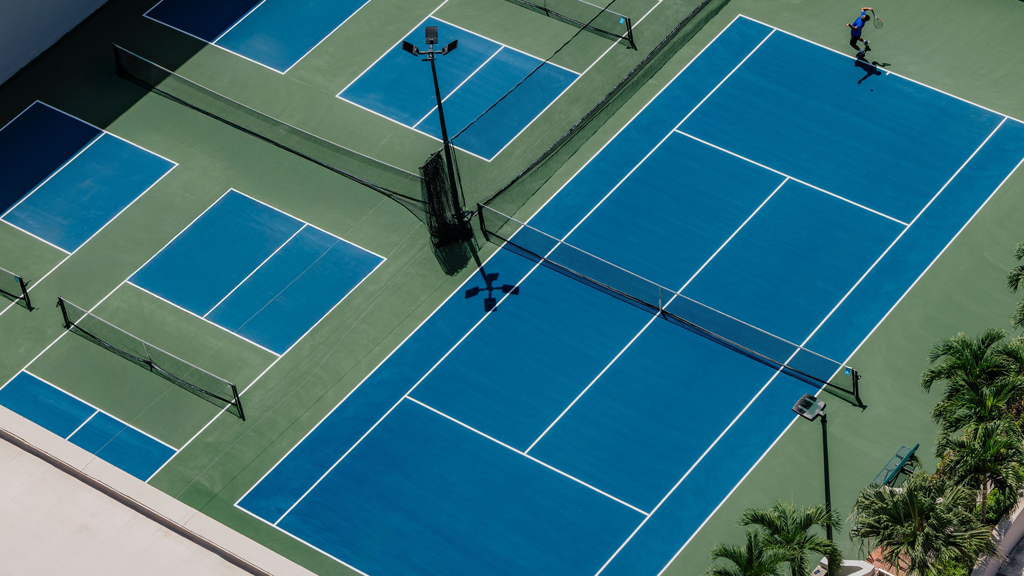
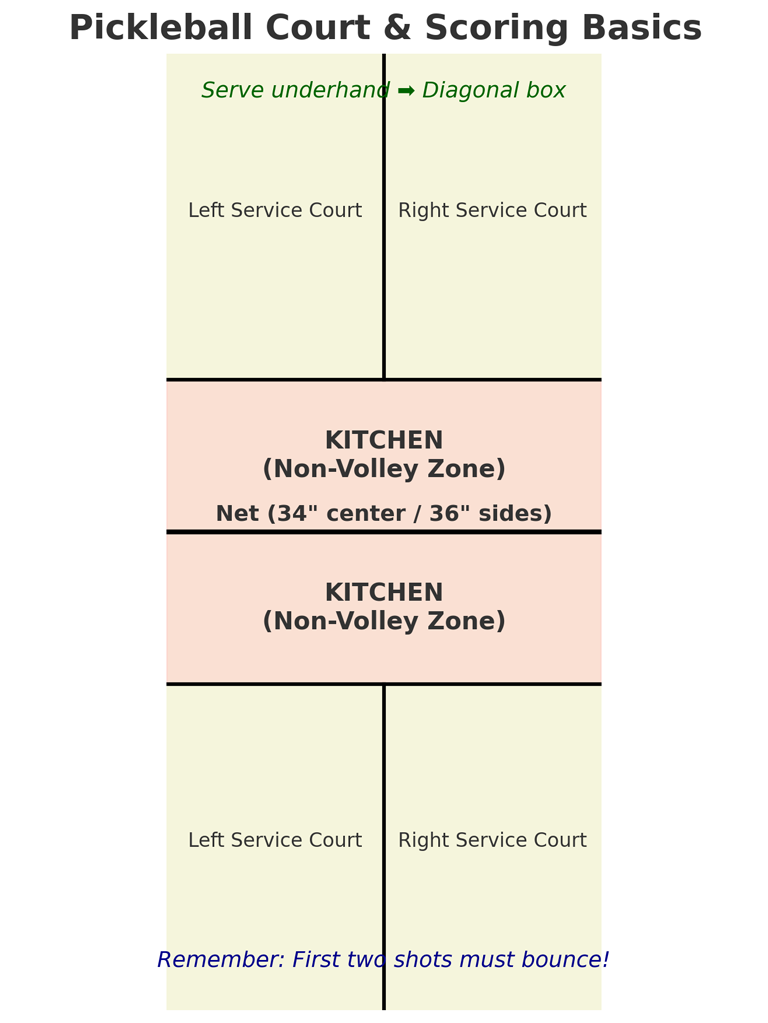
- Court size: 20 feet wide × 44 feet long (same for singles and doubles).
- Net height: 36 inches at the sidelines, 34 inches in the middle.
- Gear: Solid paddle, perforated plastic ball (a bit like a whiffle ball), and comfortable shoes — no actual pickles required.
2. The Kitchen: Not Where You Make Lunch
Ah yes — The Kitchen (officially called the Non-Volley Zone, but who’s going to call it that?).
- It’s the 7-foot area on both sides of the net.
- You can go in it… but you cannot volley (hit the ball in the air) while standing in it.
- If your momentum carries you into the kitchen after a volley — even if the ball is long gone — that’s a fault.
Pro tip: Think of the kitchen like lava in a playground game — step in only when the ball bounces, then get back out!
3. Serving Rules: Keep It Low, Keep It Cross-Court
- Serve underhand, paddle below your waist.
- Ball must land in the diagonal service court.
- No second serves — if you miss, it’s the next server’s turn.
- In doubles, both players on a team serve before the other side gets a chance (except at the start of the game, when only one server goes first).
4. The Double-Bounce Rule
The first two shots of every rally must bounce — one on the return of serve, and one on the serve itself.
Translation: you can’t charge the net right after serving and smash the ball — you’ve got to let it bounce first.
5. Scoring: The Tricky Part
Pickleball has “side-out” scoring, which means you can only score when your team is serving.
Here’s the flow:
- Server calls the score in this order: your team’s score – opponent’s score – server number (1 or 2).
Example: “4 – 2 – 1” means your team has 4 points, opponents have 2, and you’re the first server. - Games usually go to 11 points (win by 2). Tournament play can be to 15 or 21.
6. Faults to Avoid
- Hitting the ball out of bounds.
- Volleying from inside the kitchen.
- Missing the ball completely (don’t worry — it happens).
- Letting the ball bounce twice on your side.
7. Why It’s So Fun
Pickleball is fast enough to get your heart pumping, but forgiving enough for beginners to join in. There’s strategy, teamwork, and just enough friendly trash-talk to make it addictive. Plus, it’s a sport you can play for decades — whether you’re 8, 80, or anywhere in between.
Final Tip: The best way to learn is to grab a paddle, find a court, and jump in. The rules might sound like a lot now, but after a few rallies, it’ll click. And before you know it, you’ll be the one explaining the kitchen to the next newcomer.